Dave Schultz’s Triumph: How the 1988 Olympic Gold Redefined American Wrestling
Dave Schultz’s Triumph: How the 1988 Olympic Gold Redefined American Wrestling
In 1988, Dave Schultz returned from the Seoul Olympics not just as a champion, but as a transformative figure in U.S. wrestling history. His gold medal victory wasn’t merely a personal achievement—it marked a turning point for American Greco-Wrestling, proving elite talent could emerge on the global stage and elevating the sport’s stature domestically.
Schultz’s triumph, under intense pressure and fierce competition, stands as a benchmark of excellence, reshaping perceptions and inspiring a generation of wrestlers to pursue international glory. Schultz’s path to Olympic glory was forged in relentless discipline and technical mastery. Trained as a freestyle wrestler with relentless focus, he combined precision, speed, and psychological resilience—qualities that defined his competition style.
The 1988 Games featured intense battles in the 65kg weight class, where only milliseconds and subtlety determined victory. Against seasoned foes from旧苏联, Japan, and Eastern Europe, Schultz showcased a unique blend of defensive acumen and calculated offense, capturing gold with a decisive spot in the final match. His victory was controversial at times—subject to close call judgments—but it was universally acknowledged as the product of superior ring intelligence and unyielding effort.
Behind the medals lay a carefully cultivated legacy. Schultz’s success emerged from a rigorous training regimen at the University of Nebraska and under the tutelage of coaching luminaries who refined his technique and mental approach. His academic background and commitment to excellence extended beyond sport—later transitioning into journalism and advocacy for wrestling as a disciplined, respected profession.
As he reflected in later years, “Winning wasn’t the end; it was proof that American wrestlers could compete with the best. That idea changed everything.” Grosly scrutinized moments in Seoul underscored Schultz’s dominance: his ability to neutralize aggressive opponents, recover swiftly from adversity, and execute flawless transitions under pressure. In one pivotal bout, against a dominant Soviet wrestler known for suo-zuo-speed grappling, Schultz neutralized pace with superior timing and placements—an example of tactical brilliance over raw strength.
Coaches and competitors alike noted his “calm under storm,” a hallmark of mental discipline unmatched in the ring that day.
The 1988 Olympic triumph amplified Schultz’s influence, catalyzing institutional support for wrestling development across the United States. His victory coincided with a nascent revival in U.S.
wrestling programming, reinforcing the viability of the sport beyond high school gyms. Shorts later in his career, Schultz contributed to shaping youth training frameworks and NCAA competition structures, embedding a technical, strategic philosophy that prioritized technique over brute force.
Schultz’s legacy endures through accolades and living example.
He held world championships, guided Olympic hopefuls, and remained a vocal advocate for wrestling’s recognition as a serious athletic pursuit. The Washington Post described him in retrospective coverage as “the bridge between America’s wrestling past and its global future,” a deportment of integrity and excellence. His 1988 triumph was more than a medal—it was a statement to the world: American wrestlers belonged among history’s greats.
In the sweep of Olympic history, Dave Schultz’s gold represents not just a singular moment, but a catalyst. Decades later, young wrestlers still study his outcomes, admire his composure, and emulate his fusion of skill and spirit. Schultz didn’t just win gold—he built a legacy that continues to inspire.



Related Post

Understanding Billie Eilish’s Sexual Orientation: Decoding Whether Billie Eilish Is Lesbian
Paul Reubens: Peewee Herman’s Velocity Icon Dies at 70, Ends a Pub Crawl With Legacy That Endures</h2> In a twilight marked by both cinematic memory and untold facets of his life, Paul Reubens, the man behind the slobbery, eccentric, and outspoken Peewee Herman, passed away at 70. Known for redefining childhood rebellion on screen, Reubens’ death closes a chapter in American pop culture, one that blended vulgar humor with heartfelt authenticity. Once a household name from the 1980 hit film, his legacy extends far beyond the red-and-white striped shorts, now inseparable from the character who captured a generation’s cantankerous charm. <p>Born in Baltimore, Maryland, in 1952, Reubens emerged not just as an actor but as a performer unafraid of pushing boundaries. His embodiment of Peewee Herman—a defiant, snarly-haired antihero—blended physical comedy with sharp, streetwise dialogue that struck a chord with audiences hungry for authenticity. The Peewee Herman series, though commercially successful, often overshadowed Reubens’ broader artistic range. Few realize he appeared in Broadway plays, voice acting, and even avant-garde theater, proving his talents extended well beyond children’s television. As *Chicago Sun-Times* noted in its obituary, “Reubens was more than a child star—he was a performer who leveraged innocence into subversion.” <h3>A Career Built on Risk and Voice</h3> Reubens’ early career was defined by bold choices. Before Peewee, he starred in off-Broadway productions such as *The Spook Who Sat by the Door*, where his dramatic range simmered beneath the surface, hinting at complexity beneath the goof. With Peewee Herman, launched in 1985, he abandoned subtlety entirely: “Make them laugh, make them weird, make them remember,” Reubens once said, capturing the essence of his performative philosophy. The character’s signature voice—raspy, gravelly, dripping with sass—became iconic, a vocal signature recognized by millions. <p>The 1980s explosion of Peewee Herman’s films turned Reubens into a curious cultural paradox: a serious actor whose most beloved role was pure absurdity. Yet, in interviews, he insisted his performance was deliberate—a nuanced portrait of teenage defiance. “I didn’t play a cartoon character,” he explained. “I played a version of me—rough around the edges, protective of friends, screwed up, but loyal.” This authenticity resonated in an era increasingly skeptical of artificial corporate branding, making Peewee’s appeal timeless. <h2>Personal Life and Shadows Beyond the Spotlight</h2> Beyond the screen, Reubens navigated a life marked by both acclaim and private complexity. Always a confessed fan of rock ’n’ roll and jazz, his persona extended into music and visual art, though these pursuits rarely entered mainstream discourse. He resided in New York’s Greenwich Village, a neighborhood steeped in artistic tradition, maintaining long-standing friendships with peers across disciplines. <p>Despite the glare of fame, Reubens valued privacy fiercely. The Velvet Crimeoclub — a performance space and cultural hub — served as a sanctuary where he entertained trusted artists and writers. In rare public appearances, he spoke candidly of battling creative stagnation and the weight of typecasting, once remarking, “People remember the mask, not the man.” Such reflections humanized the performer, revealing layers beneath the red-and-white attire. <h3>Leadership, Mentorship, and the Legacy of Peewee</h3> Reubens’ influence reached beyond performance into mentorship. He supported emerging artists through workshops and collaborative projects, particularly those exploring boundary-pushing storytelling. The Peewee Herman Archive, now studied in theater programs, illustrates how he transformed personal quirks into universal themes of identity and belonging. <p>The character became a cultural touchstone, symbolizing youthful rebellion and resilience, but Reubens resisted reducing himself to a symbol. “Herman isn’t me,” he clarified in *Sun-Times* features, “he’s a story I inherited—and a story I continue telling, oddly enough, decades later.” This duality—public icon, private craftsman—defined his enduring presence. <h2>Enduring Impact: Why Peewee Herman Still Slaps the Nerve</h2> Even after the curtain fell, Peewee Herman retains pulse in internet memes, fashion revivals, and genre homages. His snarl, “You ya ridiculous—bury me!” echoes in viral clips and social commentary. Yet Reubens’ true legacy lies not in viral fame but in the authenticity he brought to every role. <p>Critics and fans alike praised his ability to fuse humor with emotional truth. As theater historian Dr. Elena Park observed, “Reubens taught audiences that vulnerability and absurdity coexist. He made slobberness feel sincere.” Whether in a Intervals show, a Broadway curtain call, or a private art session, Paul Reubens remained fundamentally creative—too often typecast, never fully understood. <h1>Paul Reubens, Peewee Herman’s Velocity Icon Dies at 70 — Ends a Velocity Legacy That Never Grew Old
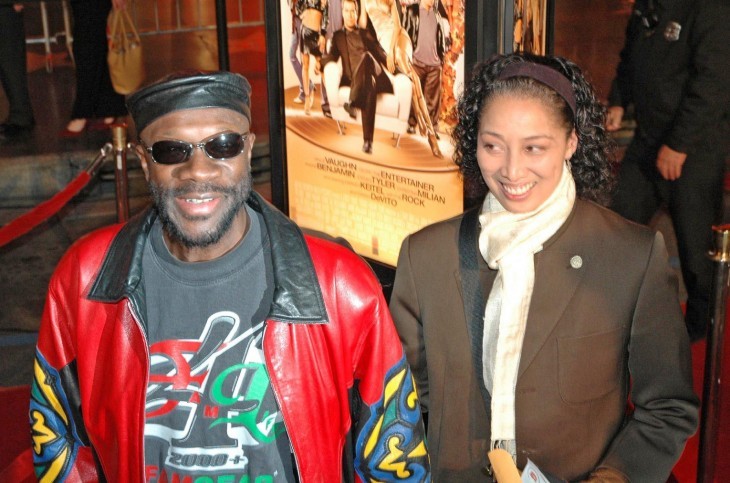
Isaac Hayes’ Wife: The Quiet Strength Behind a Literary and Musical Legacy
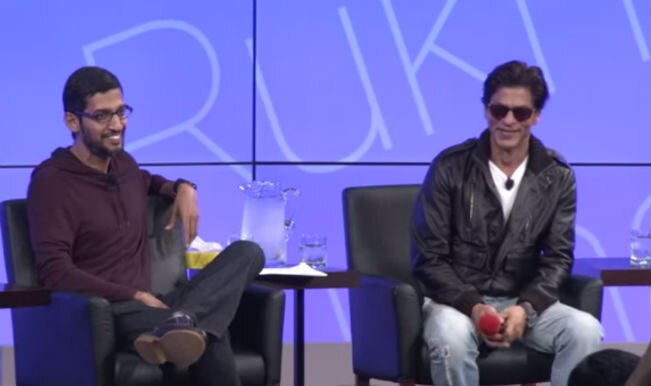
Sundar Pichai vs Shah Rukh Khan: Who Truly Wealthier in the Spirit of Global Influence?


